What CHF 150 gets you with the Half Fare Card
One month, half price, almost everywhere. Trains, buses, postbuses, boats, the panoramic trains, and city transport in more than 90 towns including Zurich zones 10 and 21 all come down 50%. The official price is CHF 150, which lands at $184.98 at checkout.
Ignore the CHF 190 annual Half Fare Travelcard you'll see quoted, and the CHF 120 version for 16 to 24 year olds. Those are residents' products and a visitor can't buy either.
A halved fare is still a fare. You buy a ticket every single time you move. The card is a discount, not a licence to walk onto trains. And there is no pass holder rate on it: these are alternatives rather than add-ons, so it really is one decision.
What the Swiss Travel Pass covers that the card only discounts
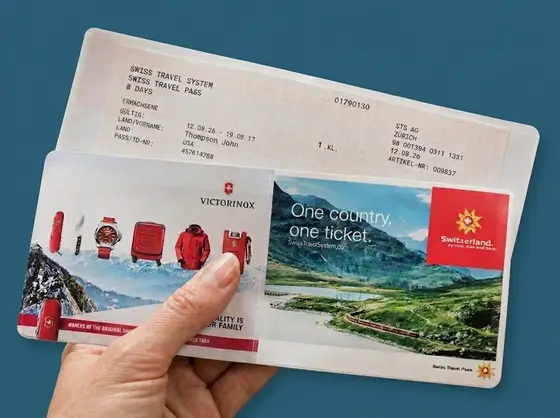
The pass runs from $313 for three days in second class up to $970.55 for fifteen days in first, and instead of halving fares it deletes them. You get on, you sit down, nobody sells you anything.
Then there's the part the card has no answer to at all: more than 500 museums free with the pass, and nothing whatsoever on the card. The official shop says so flatly. That's the single biggest gap between the two products, and it's the one people forget when they're staring at the price difference.
The pass also covers Rigi, Stanserhorn and Stoos outright, where the card charges you half.
The Half Fare Card pays for itself at CHF 300 of travel
The card halves everything, so you break even the moment you would have spent CHF 300 at full fare.
Three mountain excursions get you there before you've boarded a single intercity train, saving CHF 150 to 200 between them. If your trip is built around a handful of big days with quiet days in between, the card wins and it isn't close. If you're moving most days of the week, the pass wins, because fares stop existing rather than shrinking, and the museums and free mountains pile on top.
Where the card beats the pass: Jungfraujoch and Rochers-de-Naye
Because the card is a flat 50% and the pass isn't, the card wins exactly where the pass gives you less than half and loses where it gives you more. Here's how that plays out on the mountains people actually go up.
| Excursion | Half Fare Card | Swiss Travel Pass |
|---|---|---|
| Jungfraujoch | 50% off throughout, about CHF 49 cheaper overall | 25% on the last leg only |
| Rochers-de-Naye | 50% off | 60% off |
| Rigi from Vitznau | CHF 32 (full fare CHF 64) | Free |
| Stanserhorn | 50% off | Free |
| Stoos | 50% off | Free |
| Matterhorn Glacier Paradise | About CHF 50 (full fare about CHF 100) | About CHF 50 |
Jungfraujoch is the headline. The pass barely dents it, so the card comes out roughly CHF 49 ahead on that trip alone. Matterhorn Glacier Paradise is a draw at about CHF 50 either way, which is worth knowing if Zermatt is the centre of your trip.
Where the pass beats the card: Gruyères and the museum days
At Gruyères the card gets you there at half price and then stops being useful, because everything you came for is an admission ticket rather than a fare.
- Gruyères Castle: free with the pass, full price with the card
- The Giger Museum: free with the pass, full price with the card
- La Maison du Gruyère: free with the pass, full price with the card
- Maison Cailler: free with the pass, full price with the card
Stack two or three days like that and the pass claws back a lot of ground. Multiply it across 500 museums and you can see where the extra money goes.
Saver Day Passes make the Half Fare Card cheaper still
The card isn't only a discount on singles. SBB sells Supersaver tickets, Day Passes and Saver Day Passes to cardholders at reduced prices, and a Saver Day Pass booked well ahead beats a plain Day Pass most of the time.
A Saver Day Pass runs around CHF 29 with the card against around CHF 52 without. So a card plus two or three Saver Day Passes on your big travel days is genuinely the cheapest way to cross Switzerland. The price is commitment: you name those days in advance and you can't move them. If your weather plan involves swapping Tuesday and Thursday at the last minute, this trick isn't for you.
Children travel free on both
Under 6s go free on either product, no paperwork. Children aged 6 to 15 travel free on the Swiss Family Card, which sits on the card when a parent holds one and a valid ticket.
FAQ
How much is the Half Fare Card if you don't live in Switzerland?
CHF 150 for one month, which comes to $184.98 at checkout. The CHF 190 annual card and the CHF 120 youth version are for Swiss residents, so they're not options for you.
Does the Half Fare Card cover museums?
No, not one. The official shop states it flatly. The Swiss Travel Pass covers more than 500, which is the biggest single difference between the two.
Which is better for Jungfraujoch, the card or the pass?
The card, by about CHF 49. The pass only gives 25% on the final leg, while the card takes 50% off the whole journey.
Can I use the Half Fare Card and the Swiss Travel Pass together?
No. There's no pass holder rate on the card and no stacking, so you're choosing one.
How much travel do I need to do for the Half Fare Card to pay off?
CHF 300 of full-fare travel, since the card halves everything. Three mountain excursions clear that before you've taken a single long train, saving CHF 150 to 200 between them.
What's the cheapest way to travel with a Half Fare Card?
A card plus two or three Saver Day Passes on your heaviest travel days, at around CHF 29 each instead of about CHF 52. You have to name those days in advance and you can't change them.
Do children need their own card or pass?
Under 6s travel free on both. Children 6 to 15 go free on the Swiss Family Card, which applies when a parent holds a card or pass plus a valid ticket.