Last Updated August 2026

Every Swiss rail pass compared

Six passes cover Swiss travel: the Swiss Travel Pass, the Half Fare Card and four regional passes. The regional ones cover their own mountains in full where the national pass gives 50%.

What the Swiss Travel Pass actually buys you

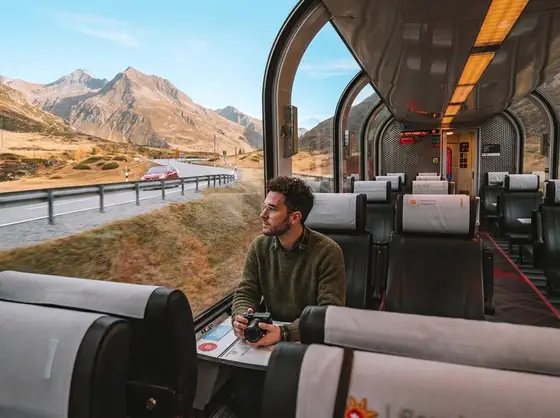
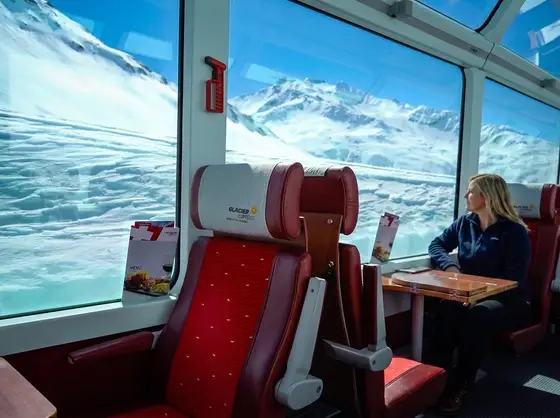
One pass, and almost every train, bus and boat in the country stops charging you. That includes city transport in more than 90 towns, so the tram from the station to your hotel is already paid for. It also covers entry to over 500 museums, which is the part nobody remembers until it's raining in Basel. The scenic routes are in there too: the fare on the Glacier Express, the GoldenPass and the rest is covered by the pass itself.

It's sold in 3, 4, 6, 8 and 15 day durations, in first or second class, and as either Continuous or Flexi. Second class runs from $313 (€270) for three days to $615 (€507) for fifteen. To buy one you have to live outside Switzerland and Liechtenstein, which rules out using it on a work posting in Zug.

Buy your Swiss Travel Pass Here

Powered by GetYourGuide

Mountains are where the pass stops being simple, because coverage changes from summit to summit.

Rigi, Stanserhorn and Stoos

Free to the summit

  • No mountain ticket to buy on top of your pass

Twenty-four other mountains

50% off the mountain ticket

  • Pass covers the journey to the valley station, then you pay half for the ascent

Jungfraujoch Final leg only

25% off the last stretch

  • Discount applies to that leg alone

Five mountains

Nothing off the mountain ticket

  • Full price whatever pass you're holding

All six passes, side by side

Two of these are national and four are regional. The regional ones are the reason a straight price comparison misleads: inside their own area they carry their own mountains in full, where the national pass hands you 50% off the mountain ticket and leaves you at the till.

If you are moving around the country

Swiss Travel Pass

From US $313 (€270) · 3 to 15 days

  • Trains, buses and boats are covered, so you stop buying tickets
  • Rigi, Stanserhorn and Stoos are free, 24 other mountains half price
  • Entry to more than 500 museums
  • Seat reservations are never covered

See what it costs

If you are staying in one or two places

Half Fare Card

US $185 (€160) · 30 days

  • Half price on trains, buses, boats and most mountain railways
  • Jungfraujoch works out cheaper than with the Swiss Travel Pass: CHF 130.60 return from Interlaken in summer, CHF 112.20 the rest of the year
  • Valid for a full month, not a fixed run of days
  • You still buy a ticket for every journey

See the Half Fare Card

Based in one region?

These cover their local mountains outright, where the Swiss Travel Pass only discounts them. Find the one that matches where you are staying.

Lucerne

Lucerne Travel Pass

From US $295 · 3 to 10 days

Pilatus, Titlis, Rigi, Stoos and Stanserhorn are all covered in full, and it costs less than the Swiss Travel Pass. If Lucerne is your base, this usually wins outright.

Compare with the Swiss Travel Pass

Grindelwald and Lauterbrunnen

Jungfrau Travel Pass

From US $259 · 3 to 8 days · April to October

Covers the Jungfrau region outright, but the last stretch up to Jungfraujoch is still charged separately. That is the part that catches people out.

Compare with the Swiss Travel Pass

Montreux and Vaud

Lake Geneva-Alps Pass

Rochers-de-Naye is covered in full, where the Swiss Travel Pass only halves the top section. Worth a look if you are staying around Montreux.

Compare with the Swiss Travel Pass

Buy this as well, not instead

Berner Oberland Pass

From US $207 · 3 to 10 days

The only one here that sits on top of a Swiss Travel Pass rather than replacing it. It adds 25 regional cable cars for a fraction of what they cost one by one.

See how it pairs

Where to go from here

If you're touring, the national pass is usually the answer and the only real questions left are class and duration. If you're settling in one valley, the regional pass for that valley beats it on the mountains.

Still deciding

Already decided

FAQ

Which pass covers the most?

The Swiss Travel Pass, by distance. Trains, buses and boats across the country, city transport in over 90 towns and more than 500 museums, all on one ticket, with three mountains thrown in free.

Can anyone buy these passes?

You have to live outside Switzerland and Liechtenstein. Residency is the only condition attached.

Does any pass get me up every mountain for free?

No. Rigi, Stanserhorn and Stoos are covered in full on the Swiss Travel Pass, 24 more give you 50% off the mountain ticket, Jungfraujoch gives 25% on the final leg only, and five give nothing at all.

Are seat reservations included in any of them?

Never, on any pass. The scenic train fares are covered, but the reservation is a separate charge, from CHF 20 on the GoldenPass to CHF 54 on the Glacier Express.

How long can I have the pass for?

Three, four, six, eight or fifteen days, in first or second class. Second class starts at $313 (€270) for three days and tops out at $615 (€507) for fifteen.

Is a regional pass better value than the national one?

Inside its own area, often, because the regional passes cover their local mountains in full where the Swiss Travel Pass gives you half off. Cross a region boundary and the national pass pulls ahead again.

So which Swiss pass should you buy?

If you're moving between regions, the Swiss Travel Pass is the one, and the only decisions left are how many days, which class and whether they run consecutively. If your trip lives in one valley and points upward, price the regional pass for that valley first, because it covers mountains the national pass only discounts.